Athletes require recovery support that keeps them consistent through tough training, soreness, and competition. Many looking for high-pressure medical cryotherapy in Los Angeles, CA, want to know how often high-pressure medical cryotherapy can be used without disrupting performance, adaptation, or return-to-play goals. The frequency depends on workload, soreness, injury status, competition demands, and post-session response.
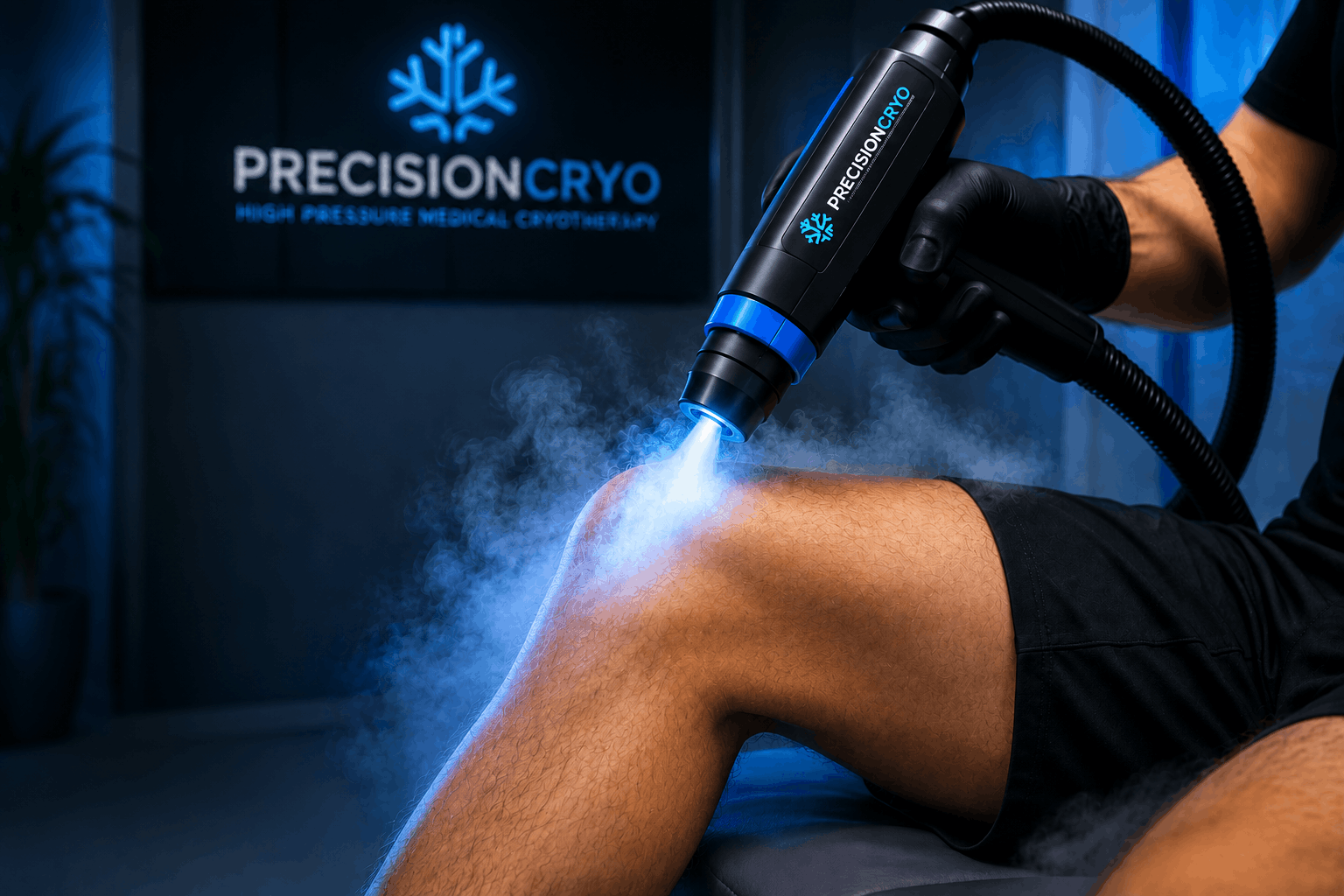
PrecisionCryo provides high-pressure medical cryotherapy for athlete recovery in Los Angeles, CA. Our high-pressure medical cryotherapy with pressurized CO2 is for athletes and active adults who want non-invasive, non-pharmaceutical recovery support without downtime. Research on cold exposure in athletic recovery shows that outcomes vary by method, timing, training type, and what researchers measure. The 2026 Frontiers in Sports and Active Living systematic review and network meta-analysis titled “Impact of different cryotherapy interventions on post-exercise acute delayed-onset muscle soreness, athletic performance, and inflammatory biomarkers: a systematic review and network meta-analysis” compared whole-body cryotherapy, cold-water immersion, contrast water therapy, and local cryotherapy across DOMS, countermovement jump performance, creatine kinase, IL-6, and CRP at different post-exercise time points. The useful takeaway is that cryotherapy frequency should match the recovery goal and the athlete’s response, not a fixed rule copied from another sport.
How High-Pressure Medical Cryotherapy Works For Athletes
High-pressure medical cryotherapy works through local physiological responses that are relevant when athletes are managing soreness, repeated strain, swelling, or tissue irritation after training. The rapid cold exposure created by pressurized CO2 may influence circulation, peripheral nerve activity, inflammatory signaling, and tissue sensitivity in the treated area. These effects can support recovery, but they should not be framed as guaranteed or identical for every athlete.
One of the key responses is cold-induced vasoconstriction. Blood vessels constrict when it is cold, which may help to reduce swelling in stressed tissue. As the area warms up again, circulation changes again, but the exact recovery response depends on the athlete, the training load, the tissue involved, and the time of the session.
How High-Pressure Medical Cryotherapy Influences Inflammation
Inflammation is a normal part of athletic recovery, but excessive inflammation can lead to soreness, stiffness, and limited movement. High-pressure medical cryotherapy is commonly used to support recovery because cold exposure may influence inflammatory response and tissue sensitivity after intense physical activity.
Research has examined markers such as creatine kinase, IL-6, and CRP, though outcomes vary based on training type, recovery timing, and the athlete’s condition. Strength training, endurance work, and impact sports can all produce different recovery demands. High-pressure medical cryotherapy may help support recovery, but it should not be viewed as a guaranteed solution for reducing inflammation or improving performance.
How High-Pressure Medical Cryotherapy Supports Recovery
Cold exposure may reduce nerve sensitivity in irritated tissue after repetitive movement, heavy loading, or impact. For some athletes, this can temporarily ease discomfort and improve movement quality after training or competition.
Recovery needs differ depending on training volume, competition schedules, soreness levels, and injury history. Some athletes use high-pressure medical cryotherapy during high-intensity training phases, while others rely on it more during tournaments, travel, or periods with limited recovery time.
For high-pressure medical cryotherapy for athlete recovery in Los Angeles, CA, treatment frequency should reflect actual physical stress rather than a fixed routine. A runner with knee irritation, a lifter managing shoulder strain, and a field athlete dealing with lower back tightness may all require different recovery schedules.
Integrating High-Pressure Medical Cryotherapy Into Training
High-pressure medical cryotherapy is most effective when combined with a broader recovery strategy that includes:
- Sleep
- Hydration
- Nutrition
- Mobility work
- Training load management
Athletes often monitor factors such as soreness, range of motion, swelling, stiffness, and warm-up quality to decide whether additional recovery support is needed.
How Often Athletes Use High-Pressure Medical Cryotherapy
There is no universal schedule that works for every athlete. Many begin with one to three sessions per week during periods of increased soreness, repetitive stress, or heavy training. Frequency may increase during competition periods or short recovery windows between events.
Rather than focusing only on pain reduction, athletes should evaluate whether sessions improve:
- Mobility
- Warm-up tolerance
- Movement quality
- Swelling
- Recovery between workouts
If symptoms continue worsening or performance declines, the issue may require a broader rehabilitation or medical approach rather than additional cold exposure.
When More Frequent Use May Help
Some athletes increase high-pressure medical cryotherapy use during:
- Competition weeks
- Tournament schedules
- Heavy training blocks
- Repetitive impact exposure
For example, basketball players managing ankle irritation, tennis players dealing with shoulder soreness, or runners experiencing knee swelling may benefit from more frequent recovery support during demanding periods.
Even in these situations, recovery plans should account for training goals, injury history, and overall physical response. High-pressure medical cryotherapy works best as one component of a complete recovery system.
“Very happy to share that the discomfort and swelling have gone down significantly since starting treatment.” — Zelina, PrecisionCryo Client
When Athletes Should Be Cautious
Daily high-pressure medical cryotherapy may not be appropriate in every situation, especially around strength adaptation, new injuries, or worsening symptoms. Cold exposure immediately after every strength session may not align with all training goals.
Medical evaluation is important if symptoms include:
- Sharp pain
- Severe swelling
- Weakness
- Spreading numbness
- Post-surgical complications
High-pressure medical cryotherapy may help manage symptoms, but it should not replace proper diagnosis or treatment when more serious issues are present.
Timing After Training
The best timing depends on the athlete’s goals. Some use high-pressure medical cryotherapy shortly after training to address soreness or swelling, while others prefer it on recovery days when stiffness peaks.
The most effective schedule is usually based on individual response and whether treatment improves readiness for the next training session or competition.
Why Athletes Choose PrecisionCryo
PrecisionCryo provides high-pressure medical cryotherapy in Los Angeles, CA, for athletes, performers, and active adults managing sports strain, joint discomfort, lower back irritation, sciatica, post-surgical pain, chronic pain, and activity-related inflammation.
Located in Studio City, PrecisionCryo is the exclusive provider of high-pressure medical cryotherapy in Greater Los Angeles and Southern California. Its patented pressurized CO2 technology is used in non-invasive sessions focused on pain relief, inflammation management, mobility, and physical function.
Our founders bring healthcare and medical device experience to recovery planning designed around tissue stress, training load, soreness patterns, and return-to-performance goals.
PrecisionCryo focuses on measurable outcomes such as:
- Reduced pain sensitivity
- Improved movement quality
- Lower swelling
- More consistent recovery between training sessions
“So happy to report my swelling is reduced today by at least 50%.” — Shannon, PrecisionCryo Client
Building A Long-Term Recovery Plan
Athletes often see better results when high-pressure medical cryotherapy is paired with consistent recovery habits and smart training management.
Tracking factors like mobility, swelling, movement quality, strength output, and recovery over the following 24–48 hours can help determine whether occasional sessions or a more structured recovery schedule is appropriate.
Frequently Asked Questions
How often should athletes use high-pressure medical cryotherapy for recovery?
Most athletes use high-pressure medical cryotherapy based on training load, soreness, injury status, and competition schedule. Some may use it once a week for maintenance, while others may use it two or three times weekly during heavy training blocks or flare-ups.
Can athletes use high-pressure medical cryotherapy every day?
Some athletes may use high-pressure medical cryotherapy daily for short periods, but daily use is typically not necessary. Frequency should depend on the recovery goal, training phase, symptoms, and medical history.
How soon after a workout should athletes use high-pressure medical cryotherapy?
Athletes often use high-pressure medical cryotherapy soon after training when soreness, swelling, or an irritated area is limiting movement. We recommend that you always wait at least 30 minutes after a workout to allow your body to cool down. Others use it later the same day or on recovery days, depending on how symptoms develop.
How many high-pressure medical cryotherapy sessions do athletes need per week?
One to three sessions per week is a common starting range for many athletes, but the right number depends on sport demand, soreness level, injury status, and response after each session.
Does frequent high-pressure medical cryotherapy improve athletic performance?
Frequent high-pressure medical cryotherapy may help some athletes manage soreness and recover between sessions, but it does not guarantee better performance. Training quality, sleep, nutrition, load management, and injury status still matter.
How does high-pressure medical cryotherapy help athletes recover faster?
High-pressure medical cryotherapy may help by reducing pain signaling, swelling behavior, and local tissue irritation after physical stress. When symptoms settle, athletes may move with fewer restrictions during the next training window.
Is it safe for athletes to use high-pressure medical cryotherapy regularly?
For many healthy athletes, regular high-pressure medical cryotherapy can be well tolerated, but screening matters. Athletes with circulation issues, cold sensitivity, heart conditions, nerve problems, open wounds, or worsening pain should seek medical guidance first.
Where can athletes get high-pressure medical cryotherapy in Los Angeles?
PrecisionCryo offers high-pressure medical cryotherapy for athletes seeking recovery support in Los Angeles. The service supports pain relief, athlete recovery, joint support, mobility, and injury recovery planning.